Best Vitamin C Serums

Uneven tone, dullness, and those tiny sunproof lines can make your skin look tired even after a good night's sleep. If you want brighter, firmer skin without layering on heavy makeup, a vitamin C serum is one of the most effective steps you can add to your routine. This guide matters because not all vitamin C formulas are created equal; concentration, stability, and formulation determine whether you actually get visible results or just an expensive bottle sitting on your shelf. I tested and researched top options so you can skip the trial and error. Ahead, you will find picks for sensitive skin, budget-friendly winners, high-strength treatments for stubborn dark spots, and tips on how to layer vitamin C with other actives safely. Whether you are new to serums or ready to upgrade, this article will help you choose a vitamin C that fits your skin type, concerns, and lifestyle, confidently.
Best Vitamin C Serums
Sunday Riley CEO 15% Vitamin C Serum

A rich, oil‑soluble 15% Tetrahexyldecyl Ascorbate serum that promises the glow of vitamin C without the sting of L‑Ascorbic Acid. The formula leans into luxurious texture and stability: squalane near the top of the list gives it a lotion‑like feel and excellent spreadability, the pump doser is reliable, and the THD form should penetrate the lipid barrier better than water‑soluble variants. In practice that means quick comfort on dry skin and a pleasant single‑step feel that can double as a lightweight moisturizer for some people in warmer months.
Results are convincing for what this product is built to do. Over several weeks I noticed more even tone and a subtle brightening, with skin feeling plumper and less dry—consistent with THD’s reported ability to convert to active vitamin C in skin and with the added antioxidants present. Where it diverges from classic L‑Ascorbic Acid serums is in tradeoffs: you get gentler pH and far better shelf stability, but the clinical backing for THD is thinner than for L‑Ascorbic Acid, so the effects may be a bit slower or subtler.
The main practical downsides are fragrance and price. The citrus essential oils, limonene and linalool give a summery scent but were enough to provoke rosacea irritation in a dermatologist tester, so anyone with reactive or rosacea‑prone skin should steer clear. And this is expensive luxury skincare—effective and enjoyable, but not a budget pick.
Overall, if your skin is dry, you dislike acidic L‑Ascorbic Acid formulas, and fragrance isn’t an issue, this serum is worth the splurge. If you’re sensitive or cost‑conscious, look elsewhere.
Check price from AmazonCeraVe Skin Renewing Vitamin C Serum

A straightforward 10% L‑ascorbic acid serum that trades luxe packaging and novel vitamin C esters for a no‑frills, wallet‑friendly entry into antioxidant protection. The formula leans on the basics: pure ascorbic acid at a modest 10% (a sensible sweet spot for beginners), glycerin and dimethicone for smooth application, ceramides to support the skin barrier, and vitamin E to help stabilize the active. In practice it feels lightweight, spreads easily, and layers under sunscreen without pilling—exactly what you want for a morning antioxidant step.
Performance is solid for the price. The 10% L‑ascorbic acid delivers the brightening and free‑radical defense you expect from ascorbic acid, and the added ceramides make it friendlier to slightly sensitive or dry skin than harsher high‑concentration serums. That said, it’s not as sophisticated as higher‑end options. Unlike Sunday Riley C.E.O. (a 15% THD vitamin C that’s more stable and luxurious), CeraVe’s ascorbic acid is inherently less stable and will oxidize over time. Users should expect color change and plan to use a bottle relatively quickly, or refrigerate it to slow degradation.
That trade‑off frames who this is for: beginners, budget shoppers, and anyone wanting a gentle, well‑formulated introduction to vitamin C without the premium price. If you want the longest lasting potency, a water‑free THD formulation or ampoules that avoid air exposure will be better—albeit at a much higher cost. Overall, CeraVe’s Skin Renewing Vitamin C Serum is practical, effective, and approachable, provided you understand the limits of L‑ascorbic acid stability and act accordingly.
Check price from AmazonPaula's Choice BOOST C15 Super Booster

A 15% vitamin C booster that pairs L‑ascorbic acid with vitamin E, ferulic acid and hyaluronic acid, Paula’s Choice C15 Super Booster promises brightening without the sting. The formula feels thin and waterlike on the skin yet surprisingly hydrating, sinking in quickly to leave a smoother, plumper finish rather than a greasy film. I found it gentle on reactive and acne‑prone skin — no burning, no flare‑ups — and results showed as a gradual evening of tone and a brighter complexion when used consistently in the morning under moisturizer and SPF. Note that vitamin C is acidic; avoid layering it with retinol or other strong acids.
Compared with Sunday Riley C.E.O. 15% THD, which uses tetrahexyldecyl ascorbate (a lipid‑soluble, more stable C form) and costs nearly double, Paula’s Choice delivers a faster‑acting, water‑soluble vitamin C without fragrance and at a far lower price. Against the CeraVe 10% L‑ascorbic acid serum, this booster offers a stronger concentration plus ferulic acid and vitamin E, so it feels closer to premium formulations while still being mid‑range. CeraVe remains the budget pick but can oxidize more readily.
The main practical drawback is the glass dropper packaging: it can feel messy, invites air exposure, and may shorten freshness compared with a pump. At $55 you’re paying for a well‑balanced active combo that brightens, hydrates, and stays gentle. Recommended for anyone who wants a potent, fragrance‑free vitamin C step; skip it if you prefer a pump or lipid‑soluble C. It’s cruelty‑free and recyclable via TerraCycle program.
Check price from AmazonTruSkin Naturals Vitamin C Facial Serum
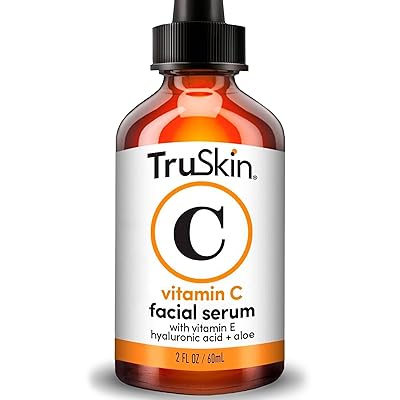
A budget Amazon bestseller that offers a gentle, low‑irritation take on vitamin C with sodium ascorbyl phosphate (SAP). The formula pairs SAP with hyaluronic acid, vitamin E and a handful of botanical extracts to deliver a lightweight, slightly gelled serum that spreads easily and layers under moisturizers. It has a faint citrus scent and a nonsticky finish; packaging is simple and unglamorous, which keeps the price down. Because SAP is water‑soluble and more stable than raw L‑ascorbic acid, this serum is kinder on acne‑prone and sensitive skin.
In practice the results are modest but real: skin looked subtly brighter and felt smoother after a few weeks, but stubborn dark spots faded only a little. That’s expected—SAP is a less powerful derivative than 10–15% L‑ascorbic acid. Unlike CeraVe’s affordable 10% L‑ascorbic acid serum, TruSkin is gentler and less prone to irritation or stinging, and it’s much cheaper than Sunday Riley C.E.O. THD vitamin C, which is more luxurious and faster at brightening. It also avoids some practical downsides of Paula’s Choice C15 booster, namely the dropper‑exposure and stronger irritation risk for sensitive skin.
If you want a no‑frills, low‑risk vitamin C to add daily without drama, TruSkin is a sensible pick. It’s best for acne‑prone, reactive complexions or anyone new to vitamin C. If your priority is rapid fading of deep hyperpigmentation, plan to pair it with stronger actives or step up to a higher‑dose L‑ascorbic option. Its low price makes daily use feasible, and replacement is cheap and straightforward too.
Check price from AmazonSkinMedica Vitamin C+E Complex
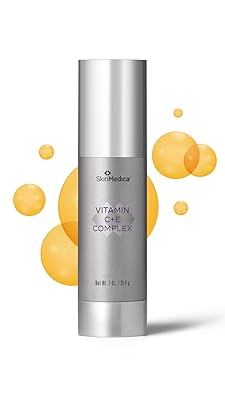
SkinMedica Vitamin C+E Complex promises all‑day antioxidant protection with a creamy, time‑release delivery that aims to firm and plump mature skin. The formula pairs vitamin C and vitamin E in a smooth, dimethicone‑rich cream that feels silky and doubles as a light makeup primer; one pre‑measured pump dispenses the right amount and the opaque pump helps limit oxidation. Unlike water‑soluble L‑ascorbic acid serums such as CeraVe’s affordable 10% offering, this cream is built to release actives gradually, so you get sustained free‑radical defense rather than a single upfront boost.
In practice it absorbs quickly, layers cleanly under moisturizer, and gives a dewy, slightly fuller appearance after a few weeks. Compared with Sunday Riley C.E.O. (THD vitamin C, luxurious but fragranced), SkinMedica is less about immediate brightening and more about day‑long protection and texture improvement; versus Paula’s Choice C15 (potent 15% L‑ascorbic acid in a dropper), the pump here reduces oxidation risk and is more convenient. It feels more elegant than budget SAP serums like TruSkin, and the silicone base creates a smooth canvas that many users appreciate as a primer.
The trade‑offs are straightforward: the rich, siliconed cream can overwhelm oily or acne‑prone skin and may feel heavy in humid weather. If you want fast brightening you’ll reach for a high‑concentration L‑ascorbic acid product; if you need sustained antioxidant support, this is a premium pick. Use it in the morning, follow with sunscreen, and make it part of a routine aimed at plumping and antioxidant protection rather than instant correction.
Check price from AmazonCOSRX Advanced Pure Vitamin C 23% Serum

A potent 23% L‑ascorbic acid serum that delivers real brightening for a budget price. COSRX’s Advanced Pure Vitamin C 23% leans hard into concentration: raw L‑ascorbic acid (the water‑soluble, fast‑acting form of vitamin C) at a level many pricier brands don’t match. The formula also includes niacinamide, licorice root and glutathione for extra brightening and a lightweight, fast‑absorbing texture that leaves skin feeling plumper. Compared with Sunday Riley C.E.O. (THD vitamin C, 15%) it lacks luxury packaging and fragrance but offers more immediate potency for a fraction of the cost.
In practice it works. I and other users noticed softer, more even skin and fading dark spots over weeks. A little goes a long way; the clear dropper is handy and the serum sinks in quickly so it layers easily under moisturizer. That said, concentrated L‑ascorbic acid at 23% is intense. My dermatologist and some testers recorded redness, heat, and rosacea flares — this is not a gentle option. If you’re used to CeraVe’s 10% L‑ascorbic acid (more forgiving) or TruSkin’s SAP (even gentler), expect a higher irritation risk here.
Practical trade‑offs matter: the serum can oxidize and some users report orange stains on pillowcases; refrigeration helps but is inconvenient. It’s a strong, affordable tool for tough, resilient skin or targeted spot treatment, but skip it if you have sensitive or rosacea‑prone skin. Patch test, introduce slowly, and consider alternating nights or pairing it with a calming moisturizer until you know how your skin reacts. Expect noticeable results over time.
Check price from AmazonTimeless 20% Vitamin C Serum

At roughly one‑tenth the price of SkinCeuticals, Timeless 20% Vitamin C Serum promises the same antioxidant trio—L‑ascorbic acid, vitamin E and ferulic acid in an airless pump. The formula is straightforward: a high 20% L‑ascorbic acid concentration for brightening and collagen support, with tocopherol and ferulic acid to boost stability. Texture is watery and fast‑absorbing; the pump is a plus compared with fragile droppers. Compared with Sunday Riley C.E.O. (a THD formula that feels luxe but contains fragrance) this is rawer and more clinical. Compared with CeraVe’s 10% L‑ascorbic acid, Timeless is stronger but more oxidation‑sensitive; compared with COSRX 23% it’s slightly less aggressive but still potent.
In practice the serum performs. Skin appears brighter and tone evens with regular morning use, especially when paired with sunscreen. The airless pump reduces air exposure, which helps compared with typical dropper bottles, and the lightweight finish layers well under moisturizers and SPF. For many users the antioxidant combo mirrors pricier formulas and delivers measurable results for a fraction.
There are trade‑offs. A full 20% L‑ascorbic acid can irritate fragile skin over time; if you’re sensitive start with a lower concentration or alternate nights. Also note the brand’s 50 ml bottle with a three‑month shelf life—this makes the bottle size a nuisance for infrequent users and raises the risk of oxidation if stored poorly.
Overall, Timeless 20% is a very pragmatic budget dupe of SkinCeuticals: affordably potent, well‑packaged, and effective for normal to resilient skin. Patch test, store cool, always follow with SPF.
Check price from AmazonDermalogica Biolumin-C Serum

A high‑performing vitamin C serum priced toward the higher end, Dermalogica's Biolumin‑C promises brightening, firming and a visible glow. The formula leans on an ultra‑stable vitamin C complex plus lactic acid and hyaluronic acid, which together offer gentle exfoliation, hydration and antioxidant benefits; a tripeptide contributes firmness. In practice the texture is slightly oilier on application but absorbs quickly and layers well under SPF and makeup, giving a noticeable, healthy glow without stinging or dryness for my oily, non‑sensitive skin.
Unlike Sunday Riley C.E.O., which uses THD‑ascorbate and adds synthetic fragrance, Biolumin‑C uses a different stable C complex and a natural grapefruit peel oil for a citrusy scent; that smells pleasant but introduces limonene and could irritate sensitive skin. Packaging is a dropper, not a pump, so expect some air exposure and to use the bottle within months to preserve potency—this is a packaging trade‑off that Timeless avoids with pump delivery and that cheaper options like Timeless or CeraVe don't always match in formulation refinement.
Compared with budget vitamin C options such as CeraVe’s 10% L‑ascorbic acid or Timeless’s 20% C+E+ferulic, Dermalogica feels more polished and gentler while costing several times as much. It sits between high‑end and clinical lines: worth the splurge if you want a refined texture and consistent glow, but skip it if you need fragrance‑free, pump packaging or a strict budget. Priced around $87 for the common bottle (larger sizes run near $130–$140), the cruelty‑free brand pedigree makes the price easier to accept for many consumers.
Check price from AmazonL'Oreal Paris Revitalift 12% Pure Vitamin C Serum

A 12% pure vitamin C serum that delivers approachable brightening and hydration without peeling back your wallet. It pairs a clear‑cut dose of L‑ascorbic acid with hyaluronic acid, so you get visible luminosity and a plumped feel after application. The opaque bottle is a practical touch — it helps shield the formula from light and reduces oxidation risk compared with clear‑packaged serums — and the texture is pleasantly thick, spreading more like a lotion than a runny liquid.
In use the serum does what it sets out to do: skin appears brighter, fine lines soften, and dark spots look less prominent over a few weeks. Compared with higher‑strength options like Timeless 20%, which is more aggressive on stubborn hyperpigmentation, this one is gentler and easier to tolerate — a good entry point for vitamin C newcomers. It also beats many luxury options, including Sunday Riley C.E.O., on price while delivering noticeable glow, though it doesn’t offer the THD stability or the silky finish of that premium formula.
The trade‑offs are straightforward. The scent is clearly present and will bother anyone with fragrance sensitivity; if that’s you, CeraVe’s fragrance‑free 10% L‑ascorbic acid is a safer alternative. I’d also prefer a pump for dosing instead of a dropper. For budget‑minded users who want reliable morning brightening with hydration, this is an effective, low‑risk choice. I keep one in my routine when I want dependable results without fuss or a high price tag and minimal irritation risk for mornings.
Check price from AmazonThe INKEY List 15% Vitamin C and EGF Serum

A 15% vitamin C serum that leans on ascorbyl glucoside plus EGF, The INKEY List’s formula pitches itself as a gentle, clinic‑friendly antioxidant with a dewy finish and a modest price tag. It’s a water‑based serum, and the use of ascorbyl glucoside (a vitamin C precursor that converts into L‑ascorbic acid once it’s absorbed) means you’re less likely to feel the sting that straight L‑ascorbic acid can cause. The texture is smoothed by ingredients like hydrogenated castor oil, so it spreads easily and leaves a subtle glow rather than a tight, matte feel.
Compared with the market, it occupies a practical middle ground. Unlike Sunday Riley C.E.O. (a THD vitamin C that’s very stable and luxe but expensive and fragranced), this INKEY option is much more wallet‑friendly and may suit sensitive skin better. Against CeraVe’s 10% L‑ascorbic acid—an affordable, straightforward dose that can oxidize—the glucoside here is more stable and usually less irritating, though it may act more slowly. It’s less polished and glamorous than Dermalogica Biolumin‑C and not as concentrated in the active form as SkinCeuticals, but it’s also a fraction of those prices and feels smoother on application than some budget L‑ascorbic formulations like L’Oreal’s Revitalift.
The inclusion of EGF and peptides is a sensible pairing rather than a marketing flourish. Epidermal growth factor and oligopeptides can support skin repair and collagen signalling, and when combined with vitamin C you get a potentially synergistic effect for redness reduction, post‑procedure recovery, and long‑term firmness. In clinical settings EGF is used after resurfacing and peels; at home, results are subtler and take time. Practically, use it in the morning under sunscreen for antioxidant protection or at night if you’re layering active treatments, and introduce it slowly if you have very reactive skin.
There are trade‑offs. Ascorbyl glucoside’s need to convert into active vitamin C means it’s often gentler but not the fastest or strongest option for immediate brightening compared with pure L‑ascorbic acid or certain derivatives like THD. The efficacy of topical EGF in over‑the‑counter concentrations is mixed, so don’t expect dramatic clinical results overnight. All that said, this is a solid, well‑priced pick for someone starting vitamin C, recovering from in‑clinic procedures, or with sensitive skin who wants antioxidant protection without the sting—or for anyone who prefers a dewy, easy‑to‑layer serum rather than a high‑end, high‑cost treatment.
Check price from AmazonOle Henriksen Banana Bright 15% Vitamin C Serum

A 15% ethyl ascorbic acid serum that leans on stable vitamin C and gentle chemical exfoliation to brighten dull skin. In practice the serum spreads easily and gives a noticeable daytime glow: the ethyl ascorbic derivative used here is more stable than plain L‑ascorbic acid and is soluble in both oil and water, so it can feel more forgiving on skin and less prone to the rapid discoloration you sometimes see with lower‑cost L‑ascorbic formulations. The inclusion of polyhydroxy acids (PHAs) is a smart touch — they chemically exfoliate with larger molecules than glycolic, so you get subtle smoothing without the same sting for most users. Texture is smooth and pleasant on application, making it an easy step in a morning or evening routine.
On results this is a solid brightening product. Expect improved radiance and more even tone with consistent use rather than dramatic resurfacing; if you want aggressive exfoliation, a stronger AHA or glycolic product will do more. Compared with Sunday Riley C.E.O. (15% THD vitamin C), Ole Henriksen’s formula gives comparable glow for many people but uses a different vitamin C form and typically sits at a more accessible price point than that luxury THD option. Unlike CeraVe’s 10% L‑ascorbic acid serum, which can oxidize and leans on ceramides to help barrier function, this one trades barrier support for the PHA boost — so it’s a different kind of utility. It’s closer in intent to glow‑focused serums like Dermalogica Biolumin‑C and the L’Oreal 12% serum, but the PHA addition here gives a gentler exfoliation than the latter two which rely more on straightforward vitamin C effects.
The main downside is the fragrance. This formula has a strong citrus scent that, according to a dermatologist with rosacea who tried it, caused irritation — that’s not unusual with fragranced vitamin C serums and it raises the irritation risk to moderate. If you have sensitive, rosacea‑prone, or reactive skin, patch test first or skip it for a fragrance‑free option. For everyone else who tolerates scent, it’s a useful brightening step: pair it with daily SPF, don’t layer aggressively with other strong acids or retinoids at first, and use consistently for best results. Bottom line: recommended for brightening if you tolerate fragrance, and a good mid‑range alternative to pricier THD serums or basic L‑ascorbic options — just be mindful of the scent if your skin is on the sensitive side.
Check price from AmazonOlay Vitamin C + Peptide Serum

A lightweight, matte-finish vitamin C serum that mixes vitamin C with peptides and lactic acid — Olay’s Vitamin C + Peptide 24 Serum promises quick absorption, daily brightening, and hydration without the greasy residue. The texture is very thin and sinks in fast, which makes it easy to wear under makeup or sunscreen; there’s a soft citrus scent up front, and the brand’s dermatologist‑tested claims plus the “no parabens, phthalates, synthetic dyes or mineral oil” callout are reassuring for everyday use. Olay also bundles a one‑week sample of its Regenerist Whip moisturizer (fragrance‑free) which pairs nicely if you want a light, non‑greasy routine starter.
Ingredient-wise the serum hits a sensible mix: vitamin C for brightness, peptides for supportive firmness, and lactic acid — an AHA that gently exfoliates while adding moisture. The formula feels gentler and less oily than a THD vitamin C like Sunday Riley C.E.O. 15%, which leans into a richer, squalane‑forward texture and a known 15% THD concentration; by contrast Olay’s finish is matte and more makeup‑friendly. It also sits differently than mass‑market L‑ascorbic acid serums such as CeraVe’s 10% L‑ascorbic formula (which can oxidize and sting) or L’Oreal’s 12% offering (also scented) — Olay appears aimed at approachable daily wear rather than maximum, clinically dosed brightening. A practical caveat: Olay doesn’t clearly disclose the form or concentration of its vitamin C, so if you want predictable, measurable potency you’ll likely prefer a product that lists L‑ascorbic acid percentages or a specified derivative.
The trade‑offs are straightforward. The citrus fragrance and presence of lactic acid mean this won’t be ideal for very reactive or fragrance‑sensitive skin; patch test first and consider starting every other day. Because the active concentration isn’t specified, expect gradual improvements rather than dramatic results — it’s a good pick for someone who wants a fast‑absorbing, non‑sticky daily brightener that layers well under makeup and SPF. If you’re chasing the most potent, clinically validated vitamin C effects, a labeled L‑ascorbic acid serum or a high‑concentration THD option will serve you better; if you want convenience, a matte finish, and a balanced mix of brightening and smoothing ingredients at an accessible mass‑market level, this Olay serum is a solid, practical choice.
Check price from AmazonSkinCeuticals C E Ferulic

A 15% L‑ascorbic acid serum paired with vitamin E and ferulic acid—SkinCeuticals C E Ferulic is essentially the formula that set the standard for topical vitamin C treatments, and the brand leans into that pedigree. Priced at about $185 for a 30 ml dropper bottle, the formula’s strengths are straightforward: 15% pure vitamin C (L‑ascorbic acid) for brightening and proven anti‑aging effects, 1% vitamin E to restore skin lipids, and 0.5% ferulic acid to boost stability and antioxidant synergy. Clinical data backs the product’s environmental‑damage claims (SkinCeuticals cites up to a 41% reduction in combined oxidative damage) and the company notes the serum remains active for up to 72 hours after absorption; it’s also fragrance‑free, paraben‑free and positioned for normal to sensitive and post‑procedure skin.
In everyday use the serum feels lightweight and slips on smoothly, absorbing to a non‑greasy finish. Expect a little initial tingle if you’re sensitive—L‑ascorbic acid is a highly active, water‑soluble form of vitamin C and can be more irritating than oil‑soluble alternatives—but that activity is also why it’s so well studied and effective. Compared with Sunday Riley C.E.O., which uses a THD (tetrahexyldecyl ascorbate) form designed for a gentler, oilier texture and includes fragrance, C E Ferulic favors proven potency over plushness. Against budget options like CeraVe’s 10% L‑ascorbic acid serum or L’Oreal’s 12% formula, SkinCeuticals offers a stronger concentration and deeper clinical validation, though those cheaper serums are perfectly reasonable if cost or mild oxidation risk is a priority. Dermalogica’s Biolumin‑C sits closer on performance but tends to be priced similarly and often scented, so C E Ferulic’s fragrance‑free status is a practical plus.
That said, the trade‑offs are clear. The price is steep and the dropper bottle format raises oxidation concerns in theory; SkinCeuticals insists their final‑packaging stability testing supports a long shelf life (they state stability for 36 months unopened and up to six months after opening), but sensible storage—cool, dark place and tight cap—helps. If you’re extremely budget conscious, or you want a fragrance‑forward, more lotion‑like vitamin C, options like Sunday Riley or L’Oreal give you different balances of comfort, scent, and cost. For people treating advanced photodamage, preparing for or recovering from procedures (consult your physician), or who want the specific antioxidant “holy trinity” with the strongest clinical backing, C E Ferulic remains worth the investment.
Use it in the morning after cleansing and before sunscreen, patch test if you’ve never used a high‑strength L‑ascorbic acid product, and plan to replace within the manufacturer’s recommended window once opened. In short: it’s expensive, but for those who want the most clinically supported topical vitamin C formula available, SkinCeuticals C E Ferulic still earns its “gold standard” reputation.
Check price

Comments
Post a Comment